EP4. Kacie Newport
March 4, 2026: My guest for this episode of “One Thing – Literary Edition” is Kacie Newport, Founder & Talent Manager of BAM Management. Her advice is to maintain your authenticity in all that you do.
HOW TO LISTEN: This podcast is distributed directly through Podcast.co. The RSS feed is available at feed.pod.co/one-thing-literary-edition. You can listen via the embedded media player on our pages -- OR through your favorite podcast app as well as directly in your browser via the services listed below.Additional Resources:
bam.management
bambooks
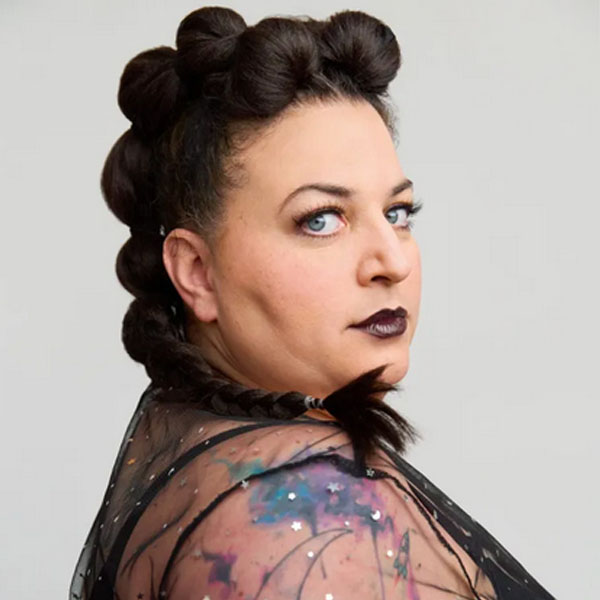
In the podcast episode of “One Thing – Literary Edition,” Kacie Newport shares her perspective on staying true to your creative voice and utilizing modern tools responsibly.
The Power of Authenticity
Kacie identifies “authenticity” as the single most important factor for success in the arts and entertainment business.
- Nonfiction & Memoir: For these genres, authenticity means being true to the story and yourself. While it is often said all stories have been told, Newport argues they haven’t been told in *your* specific way.
- Fiction & Voice: Successful fiction requires an authentic voice. Writing that tries to be something it’s not—or tries to manufacture a persona—rarely “sticks” with a reader.
- Avoiding Trends: She warns against “fad writing,” which involves trying too hard to fit specific tropes or trends seen on platforms like BookTok.
- The Gallery Analogy: Newport compares authentic creators to one-of-a-kind pieces in an art gallery, whereas trend-following work is more like mass-produced items found in a big-box store.
AI as a Creative Assistant
Despite being a writer herself, Newport holds the “unpopular opinion” that AI is a valuable tool if used correctly.
- Leveling the Playing Field: She believes AI can help bridge the gap for creators who cannot afford research or writer’s assistants.
- Organization, Not Creation: AI should be used to organize thoughts, create timelines, or check the logic/math of a story—essentially acting as a faster version of a Google search.
- The “No-Writing” Rule: She explicitly states that AI should **not** be used to actually write the work. Just as a painter wouldn’t have someone else paint their canvas, an author must remain the creator of the prose.
- Responsibility: Users must remain mindful of the ethics regarding copyright and the environmental impact of using AI.
Stuart Brown: Welcome to Welcome to One Thing – Literary Edition, a podcast that asks a simple question of seasoned literary agents: What is one piece of advice you would give to new authors? I’m your host, playwright and author Stuart Brown. Information about all my work can be found at my website, stuartjbrown.com. On today’s episode, I am very pleased to have Kacie Newport, founder and talent manager of BAM Management. Welcome to the program, Kacie.
Kacie Newport: Thank you so much for having me.
Stuart Brown: So Kacie, what is your one thing?
Kacie Newport: My one thing is authenticity. I have found throughout my career that the most successful artists in any capacity, or business people in showbiz or entertainment and arts, are authentic.
Stuart Brown: So for an author writing a story, how does authenticity play into that?
Kacie Newport: So, twofold. You know, if we’re looking at nonfiction, obviously, you know, be your authentic self or be authentic to the story you’re telling. Many times when we work with nonfiction writers or memoirs, we’re looking for that authentic story that’s authentic to them and, what do they say? They say all stories have been told before. But they haven’t because they haven’t been told in your own way. And when you are your own self and tell your own stories, even if we’ve heard similar, it’s always going to be awesome, right? It’s going to be different. When it comes to fiction, you know, the same idea. You know, we’re looking for authentic voices that are telling whatever story they’re telling but are true to themselves. And I think when we try to be something that’s not ourself, the writing never works, it never sticks.
Stuart Brown: So would that be something where, let’s say an author—let’s focus maybe on fiction—is trying to maybe manufacture something that, when it’s read, seems false to the reader?
Kacie Newport: Sure. You know, a good way to put it, because, you know, we get a lot of queries and also we’re avid readers. So when it seems “jargony,” if you will, or it seems like they’re putting every thought, every trope, or every anti-trope, or they’re trying too hard to do what sells on BookTok or trying to fit in a genre, you know, it’s like, I would consider that like fad writing. Great for fan fiction, not necessarily great for the type of stuff that we look for. And I feel like a lot of times, and this is with artists across the board—with my actors, we also rep speakers and, you know, writers as well and filmmakers—and I think lots of times they get in their head by following trends on social media and things that they’re seeing, and they forget just to write at the simplest basis what they know or be what they know.
Stuart Brown: It almost seems like for someone to take a step backwards, take a breath, and then write, as opposed to, like you’re saying, “Well, what’s the trend?” or “I’m reading this, I’m reading that, I have to do this, I have to do that.”
Kacie Newport: Yeah. I always say it like this, and especially with us because we’re specifically a management company, so we’re really hands-on. And, you know, I liken it to this: You can go to Target or anywhere, a shop that has multiple items of the same thing, and you can buy a piece of art or a book, and it’s one of a thousand billion of the same thing. Or, you can go to an art gallery or a local artisan’s shop and buy a one-of-a-kind. And I like to say the type of people we’re looking for are the type of people that are one-of-a-kind. Something that stands out and is a real piece of art. And of course, that can work with commercial things, of course, but it still has to pop, you know, and that’s what we’re looking for.
Stuart Brown: In today’s world, you have AI, and it would seem very tempting for an author to maybe help themselves because AI could maybe be authentic for them.
Kacie Newport: Unpopular opinion: I love AI. I’m also a writer—both a screenwriter and a novelist—that’s my creative art as much as running the company. And, I’m going to quote, not quote, but I’ll paraphrase Ben Affleck saying that if you use AI the right way, it more levels the playing field. And what I’ve noticed as a business owner, that if you use it correctly and limited—you know, obviously it is taking up natural resources—but that aside, just on the idea of AI in and of itself, if you are using it as an assistant, somebody to help organize thoughts, it’s no different than Googling, it’s just quicker. And for example, if you’re looking up something from 2,000 years ago, you would have to—I mean, my goodness, I grew up in the 80s and 90s—I’d have to go to four libraries, I’d have to make phone calls. And yes, Google helps that, but AI can really organize those thoughts. Should you be using it to write? No. That’s your art. Like, literally, would you have somebody else paint your work? No. That’s your art. We’re not going to do that. At least you shouldn’t; I would never do that. But to help me say, “Okay, I have all these ideas, can you put them in a timeline? Can you help me with the math of this? Does this make sense?” It’s for people that don’t have the money to hire a writer’s assistant or a research assistant. I think it’s a great tool. We have to be responsible because there’s ethics with, of course, with our art and writing and copyright and it pulling other stuff, but if it’s just stuff that you would Google, then I think it’s okay. And then of course, be responsible environmentally.
Stuart Brown: Kacie, thank you for sharing your one thing. I think authenticity is so important, and I think as a writer for myself, for others, it’s the ease of because you can be yourself as opposed to who do I want to be?
Kacie Newport: I think ultimately, if you stop worrying about the sales part of it—obviously, it’s a business when you’re going into professional writing or acting or painting or anything, there’s a business aspect to it—but don’t forget why you got into the business of it. It’s because we’re makers. We have to make the art, and that’s all it’s really about.
Stuart Brown: Kacie, again, I want to thank you for coming onto One Thing – Literary Edition. My guest today has been Kacie Newport, founder and talent manager of BAM Management. My name is Stuart Brown. I’m a playwright, author, and you can get all my information at my website, stuartjbrown.com. I’ll be back again with a new episode in just a few weeks.
ABOUT THE HOST
Stuart J. Brown is an award-winning Connecticut playwright whose 10-Minute works have been staged across the country. He’s also written four full one-act plays. You can see all his work at stuartjbrown.com.
Brown is a theater critic with the Outer Critics Circle and the Connecticut Critics Circle. Additionally, he operates the 24/7 online Broadway radio station, Sounds of Broadway (soundsofbroadway.com), featuring the best from Off-Broadway, Broadway, and London stages. His ‘On Broadway’ podcast features discussions with figures from the world of music and stage. He’s aired more than 700 episodes since 2006. (broadwayradioprograms.com)
Additional podcasts include “One Thing with Stuart Brown” (stuartjbrown.com/podcast) with the latest edition focusing on the world of publishing and writing. He asks a simple question of seasoned literary agents...
For questions & press inquiries, email stu@stuartjbrown.com. Follow on Instagram @stuartjbrown_author. More resources available in the Press Room at stuartjbrown.com/press-room
